What Are The Signs Of An Allergic Reaction?
The symptoms of an allergic reaction can range from mild to severe, and vary from person to person. They also differ according to the allergen involved. Most symptoms affect the nose, eyes, skin, digestive system or mouth and airways. The most common symptoms include:2
- Itchy, watery eyes
- Sneezing
- Runny nose
- Nasal congestion
- Itchy, red or peeling skin
- Rashes or hives
- Swelling, especially around the face
- Wheezing or shortness of breath
- Increased pulse
- Dizziness
How To Treat Mild To Moderate Allergy Symptoms
For symptoms of hay fever and other relatively mild allergies, over-the-counter (OTC) treatments and allergen avoidance can usually bring relief.
Of course, one of the best ways to stop an allergic reaction from happening is simply to avoid any known triggers. Read our tips for reducing your exposure to indoor and outdoor allergens.
Allergy pills and nasal sprays
Antihistamines are designed to help block histamine, one of the substances your immune system produces in response to allergens. Histamine causes many allergy symptoms, such as sneezing, runny nose and itchy, watery eyes, and antihistamine medications can help stop the reaction and bring relief.1
Depending on the location of your symptoms, you may opt for pills, liquids, nasal sprays or eye drops. Both over-the-counter and prescription antihistamines are available. Note that some antihistamines can cause drowsiness.1
If your nose is stuffed up, an OTC or prescription nasal decongestant pill or spray may be more useful. These medicines reduce inflammation within the nasal passages to ease congestion.
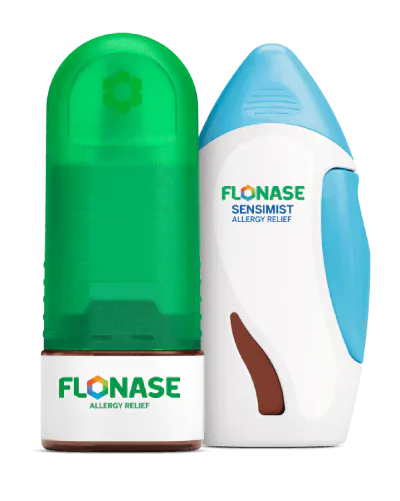
For relief of a wider spectrum of symptoms, an allergy nasal spray can be useful. Flonase products help block not just histamine*, but five other inflammatory substances produced by your immune system, which means these products can relieve nasal congestion, plus itchy, watery eyes†, runny nose and sneezing. Always read the label prior to use.
When to see your doctor
If your allergy symptoms are more serious or do not respond to OTC medications, consult your doctor or a specialist.
SEVERE ALLERGIC REACTIONS: ANAPHYLAXIS
A particularly severe allergic reaction can cause the body to go into a state of shock. This condition is called anaphylaxis, or anaphylactic shock. If you think someone is experiencing anaphylaxis, seek emergency medical help right away:1,2,3
HOW TO TREAT A SEVERE ALLERGIC REACTION
If you suspect that you or someone else may be going into anaphylactic shock, call 911 immediately. Note that symptoms of anaphylaxis may start off mild, but can rapidly escalate.1
Check if the person has an epinephrine auto-injector (commonly called an EpiPen) with them, or if one is available.