
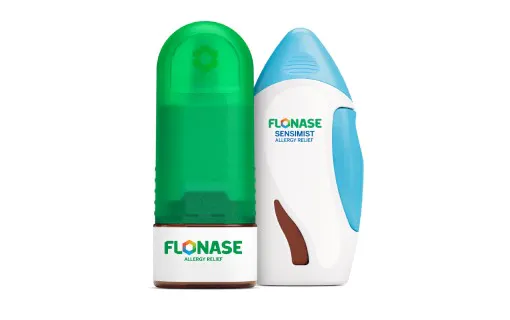
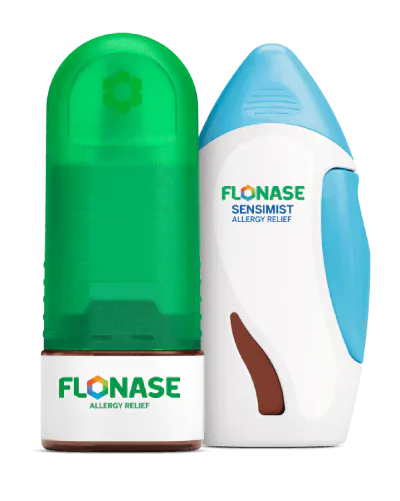

Four different Flonase allergy relief nasal spray bottles side-by-side

Side Effects of Flonase Allergy Relief

Browse our collection of Flonase multi-symptom allergy relief products and find the hard-hitting allergy relief you’ve been chasing.

Click below to learn the correct Flonase dosages for each product.

Select Your Product To Get Started

Flonase Allergy Relief

Flonase Allergy Relief is meant to work in your nose. Never use in your eyes or mouth.
 

  • If you or your child have an allergic reaction to this product, with sudden swelling of the face or tongue, a rash, wheezing, or feeling faint, stop using Flonase Allergy Relief and see a doctor right away.

  • If you or your child experiences a nose injury with severe or frequent nosebleeds, apply pressure to your or your child's nose. Stop using Flonase Allergy Relief and see a doctor right away.

  • If you or your child experiences a constant whistling sound that does not go away, this could be a sign of damage to your or your child's nose. Stop using Flonase Allergy Relief and see a doctor right away.

  • If you or your child experiences cloudy or reduced vision, it could be the result of eye conditions such as cataracts or glaucoma. Be sure to schedule a yearly eye exam to check for these conditions.

  • If administering to your child, talk to their pediatrician if you are concerned they may experience certain growth effects, such as a slower growth rate, as a result of using Flonase Allergy Relief. Also, speak to your child's pediatrician if your child is between the ages of 4 and 11 and needs to use Flonase Allergy Relief for longer than 2 months a year.
     

Talk to your doctor or pharmacist if you or your child experiences other side effects such as headaches or sneezing, a bad taste or smell, minor nosebleeds, or a dry or irritated nose or throat.
 

Finally, please read the Drug Facts on the back of the Flonase Allergy Relief package to be aware of any additional information that may be helpful to you. If you have any concerns about side effects, talk to your doctor.

Flonase Sensimist Allergy Relief

Flonase Sensimist is meant to work in your nose. Never use in your eyes or mouth.
 

  • If you or your child have an allergic reaction to the product, with sudden swelling of the face or tongue, a rash, wheezing, or feeling faint, stop using Flonase Sensimist and see a doctor right away.

  • If you experience a nose injury with severe or frequent nosebleeds, apply pressure to your nose. Stop using Flonase Sensimist and see a doctor.

  • If you experience a constant whistling sound that does not go away, this could be a sign of damage to your nose. Stop using Flonase Sensimist and see a doctor right away.

  • If you or your child experiences cloudy or reduced vision, it could be the result of eye conditions such as cataracts or glaucoma. Be sure to schedule a yearly eye exam to check for these conditions.

  • If administering to your child, talk to their pediatrician if you are concerned they may experience certain growth effects, such as a slower growth rate as a result of taking Flonase Sensimist. Also, speak to your child's pediatrician if your child is between the ages of 2 and 11 and needs to use Flonase Sensimist for longer than 2 months a year.

  • If you are concerned that you or your child are experiencing other side effects such as headaches or sneezing, bad taste or smell, minor nosebleeds, or a dry or irritated nose or throat, talk to your doctor or pharmacist.
     

Finally, please read the Drug Facts on the back of the Flonase Sensimist package to be aware of any additional information that may be helpful to you. If you have any concerns about side effects, talk to your doctor.

Children’s Flonase Sensimist Allergy Relief

Children’s Flonase Sensimist is meant to work in your child's nose. Never use in your child's eyes or mouth.
 

  • If your child has an allergic reaction to this product, with sudden swelling of the face or tongue, a rash, wheezing, or feeling faint, stop using Children’s Flonase Sensimist and see your child's pediatrician right away.
  • If your child experiences a nose injury with severe or frequent nosebleeds, apply pressure to their nose. Stop using Children’s Flonase Sensimist and see your child’s pediatrician right away.
  • If your child experiences a constant whistling sound that does not go away, this could be a sign of damage to their nose. Stop using Children’s Flonase Sensimist and see your child’s pediatrician right away.
  • If your child experiences cloudy or reduced vision, it could be the result of eye conditions such as cataracts or glaucoma. Be sure to schedule a yearly eye exam to check for these conditions.
  • If administering to your child, or supervising their use, talk to their pediatrician if you are concerned they may experience certain growth effects, such as a slower growth rate, as a result of taking Children’s Flonase Sensimist. Also, speak to your child's pediatrician if your child is between the ages of 2 and 11 and needs to use Children’s Flonase Sensimist for longer than 2 months a year.
  • If you are concerned that your child is experiencing other side effects such as headaches or sneezing, bad taste or smell, minor nosebleeds, or a dry or irritated nose or throat, talk to your child’s pediatrician or pharmacist.


Finally, please read the Drug Facts on the back of the Children’s Flonase Sensimist package to be aware of any additional information that may be helpful to you and your child. If you have any concerns about side effects, talk to your child's pediatrician.

Children’s Flonase Allergy Relief

Children’s Flonase is meant to work in your child's nose. Never use in your child's eyes or mouth.
 

  • If your child has an allergic reaction to this product, with sudden swelling of the face or tongue, a rash, wheezing, or feeling faint, stop using Children’s Flonase and see your child's pediatrician right away.
  • If your child experiences a nose injury with severe or frequent nosebleeds, apply pressure to their nose. Stop using Children’s Flonase, and see your child's pediatrician right away.
  • If your child experiences a constant whistling sound that does not go away, this could be a sign of damage to their nose. Stop using Children’s Flonase and see your child's pediatrician right away.
  • If your child experiences cloudy or reduced vision, it could be the result of eye conditions such as cataracts or glaucoma. Be sure to schedule a yearly eye exam to check for these conditions.
  • If administering to your child, talk to their pediatrician if you are concerned they may experience certain growth effects, such as a slower growth rate, as a result of using Children’s Flonase. Also, speak to your child's pediatrician if your child is between the ages of 4 and 11 and needs to use Children’s Flonase for longer than 2 months a year.
  • If you are concerned that your child is experiencing other side effects such as headaches or sneezing, bad taste or smell, minor nosebleeds, or a dry or irritated nose or throat, talk to see your child's pediatrician or pharmacist.


Finally, please read the Drug Facts on the back of the Children’s Flonase package to be aware of any additional information that may be helpful to you and your child. If you have any concerns about side effects, talk to your child's pediatrician.

Use as directed. Please see specific products for full labeling information.

Find The Best Flonase Product For You

Leading a life not limited by allergies starts with: Flonase. Be tough on allergies, not on the planet with our new, eco-friendly paper recyclable packaging.*

Buy Now

*In 2024, new sustainable paper recyclable packaging will only be featured on Adult Flonase and Sensimist sprays.
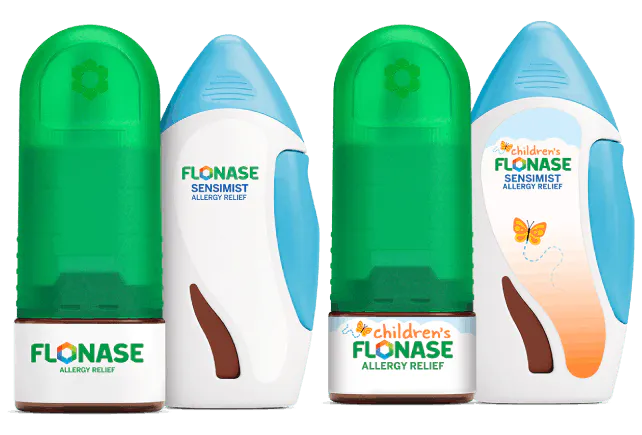
Four different Flonase allergy relief nasal spray bottles side-by-side