Allergy Attack Symptoms
Allergy attack symptoms vary based on the substance involved and can affect your airways, sinuses and nasal passages, and skin.2 Allergy symptoms can range from very mild to severe, sometimes even require medical attention. However, most allergy symptoms are not dangerous and can be soothed at home. Sneezing, itching, a runny, stuffy nose, and watery or red eyes are all symptoms of allergies. Allergy attack symptoms can be uncomfortable but avoiding known triggers such pollen and treating symptoms with over-the-counter medication can help.2
Allergy Causes and Irritants
Allergies occur when your immune system mistakes a harmless substance for a dangerous one.2 Your immune system then produces antibodies that release a number of chemicals, such as histamine, that cause allergy symptoms.2 Allergy attacks can include allergic reactions to certain foods, insects, or medications, but typical nasal allergies are caused by airborne allergens like pollen, animal dander, dust mites, and mold.2
You’re more likely to develop allergies if you have a family history of allergies or have asthma.2
How Long Do Allergies Last?
If you suffer from allergies, you likely have wondered when they’ll finally go away. Or maybe you’re wondering if your snuffy nose is from a cold or allergies. While a cold typically goes away in less than one week, allergies last as long as the allergen is in the air, typically two to three weeks per allergen.3 Allergies also occur at the same time every year for each allergen, during what is typically called “allergy season.”
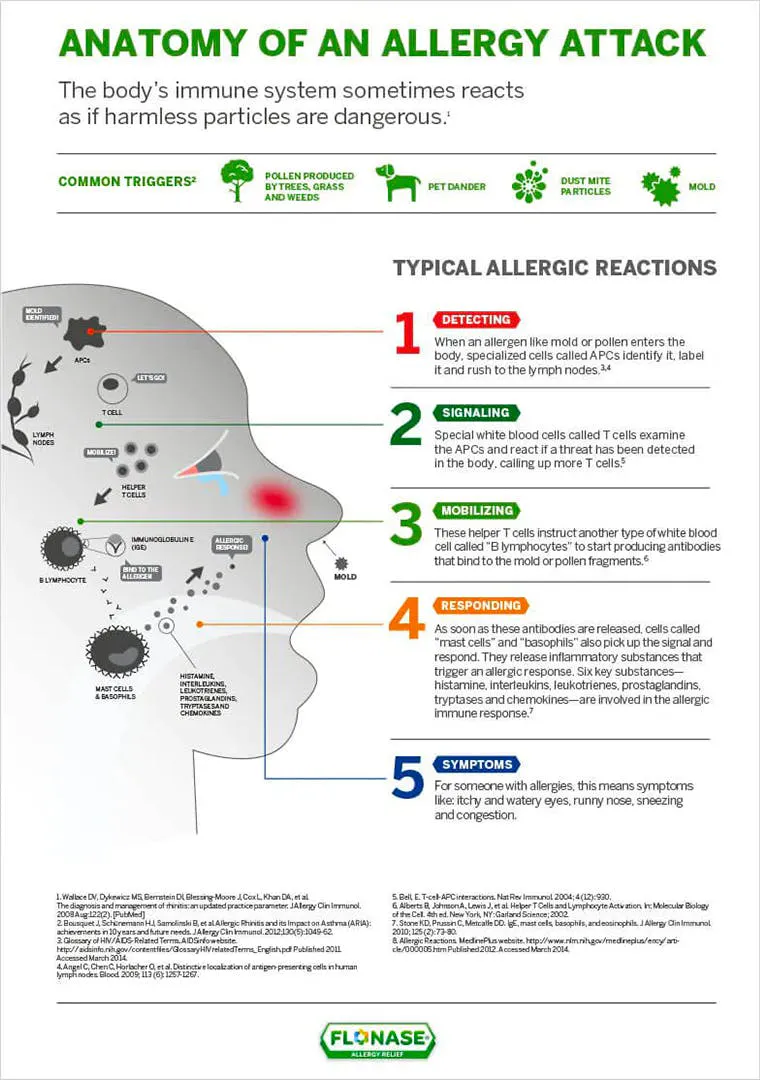
Anatomy of an Allergy Attack
The diagram below takes you through the stages of a typical allergy attack, starting from the allergens entering your nose, showing how your immune system responds, and explaining the resulting symptoms.